
EMS Supply Chain Management: Best practices for supply chain resilience
EMS supply chain management has become a strategic priority for OEMs operating in demanding industries.

EMS supply chain management has become a strategic priority for OEMs operating in demanding industries.

One failed circuit board can delay an entire product launch. For OEMs building complex electronics, printed circuit board assembly is no longer just a sourcing decision. It is a risk decision. A PCBA can control power, communication, sensing, diagnostics, motion, safety, data, and product intelligence. When that board fails, the product can fail. When production is delayed, launch timelines can slip. When testing is weak, quality problems can reach the field.That is why more companies are rethinking where their electronics are built. And increasingly, the answer is closer to home. For complex electronics, manufacturing is no longer just a cost decision—it is a risk decision. The market is shifting from lowest cost to lower risk For years, electronics sourcing was heavily driven by unit price. Many companies looked offshore to reduce cost, especially for high-volume products. But the market has changed. Today’s OEMs are managing more advanced products, tighter launch schedules, component availability challenges, freight delays, tariff uncertainty, geopolitical risk, and higher expectations for quality and reliability. In that environment, the lowest quoted price is not always the lowest total cost. A cheaper board can become expensive when it creates production delays, engineering rework, quality escapes, freight complications, communication gaps, missed launch dates, inventory exposure, or supplier instability. The lowest quoted price is not always the lowest total cost. For complex electronics, the better question is no longer simply who can build it for less. The better question is who can help reduce manufacturing risk. What makes complex PCBA manufacturing different Complex PCBA manufacturing goes far beyond basic board assembly. These assemblies may include: Additional requirements such as custom testing, serialization, traceability, conformal coating, and box-build integration often add another layer of complexity. These boards frequently operate in vehicles, drones, industrial equipment, energy systems, rugged devices, and EV-related applications where quality and reliability are critical. Complex electronics require more than assembly capacity. They require manufacturing discipline, test strategy, and engineering collaboration. Why U.S.-Based PCBA Manufacturing Matters U.S.-based PCBA manufacturing helps reduce the distance between design and production. When engineering, purchasing, quality, supply chain, and manufacturing teams can collaborate more closely, small issues are less likely to become costly delays. Domestic manufacturing can help improve: This is especially valuable when products are evolving and OEMs need fast, direct feedback from their manufacturing partner. When problems are identified sooner, costly delays become easier to avoid. Total Cost Matters More Than Unit Price A PCBA quote only tells part of the story. The total cost of manufacturing also includes engineering time, inventory exposure, freight, quality performance, testing effectiveness, supply-chain resilience, and the ability to scale production. That is why OEMs should evaluate manufacturing partners based on total value, not just unit cost. A strong EMS partner should help determine whether a product can be built reliably, tested properly, sourced effectively, and supported as the program grows. DFM, DFT, and Testing Are Critical A prototype proves that a design can work. Production proves that the design can be built, tested, and delivered consistently. A prototype proves a design can work. Production proves it can scale. Depending on the product, testing may include: For complex electronics, testing should never be treated as an afterthought. It should be part of the manufacturing strategy from the beginning. Why ACTIA Electronics ACTIA Electronics supports U.S.-based EMS and PCBA manufacturing from Romulus, Michigan. The company combines local manufacturing responsiveness with ACTIA Group’s broader global electronics manufacturing experience. For OEMs, that means access to strong testing capabilities, manufacturing optimization support, responsive engineering communication, and a partner focused on production readiness. ACTIA Electronics is especially relevant for OEMs working in mobility, industrial electronics, drones, EV-related systems, energy, rugged electronics, and connected devices. The strongest fit is often where quality, testing, production readiness, supply-chain resilience, and local support matter most. A stronger path from prototype to production The transition from prototype to production is where many electronics programs encounter challenges. A design may function perfectly in development but still create sourcing, assembly, inspection, documentation, or testing issues during production. Identifying those risks early helps create a more stable path to launch. What OEMs should prepare before requesting a PCBA quote A better quote starts with better information. Before requesting a PCBA quote, OEMs should prepare a complete technical package. This includes: Design & Manufacturing Documentation Production Requirements Testing & Quality Requirements Additional Manufacturing Requirements A complete package helps the EMS partner quote accurately, reduce assumptions, and identify manufacturing risks earlier. It also creates a more productive conversation around manufacturability, testability, sourcing, and production ramp. Choosing the Right U.S.-Based PCBA Manufacturing Partner OEMs should look beyond assembly capability alone. The right partner should understand manufacturability, testability, sourcing risk, production ramp, quality expectations, and long-term support. For complex electronics, the best EMS partner is not simply a vendor—it is a manufacturing partner that helps reduce risk throughout the product lifecycle. U.S.-based PCBA manufacturing is becoming more important because OEMs need greater control, better communication, stronger quality support, and increased supply-chain resilience. For complex electronics, domestic manufacturing is not just about location. It is about confidence. As the industry continues to shift from cost reduction to risk reduction, the right manufacturing partner can make the difference between delay and momentum, uncertainty and control, prototype and production. Why OEMs Choose ACTIA Electronics Frequently Asked Questions What is U.S.-based PCBA manufacturing? U.S.-based PCBA manufacturing means printed circuit board assemblies are built by an electronics manufacturing partner located in the United States. Why are OEMs choosing domestic PCBA manufacturing? Many OEMs are choosing domestic manufacturing to improve communication, increase visibility, reduce risk, and support reshoring strategies. Why is testing important in complex PCBA manufacturing? Testing verifies that assemblies perform as intended before shipment and helps improve reliability, quality, and traceability.

To address the new challenges of its ecosystem, ACTIA is continuing the transformation program of its flagship industrial site: ACTIA Colomiers.

ACTIA transforms a regulatory constraint into an opportunity:product security, supply chain reliability and strengthening customer confidence. RoHS 2027 therefore does not only mark a regulatory deadline. It illustrates a broader transformation of the electronics industry, where industrial performance and environmental responsibility are now moving forward together.

On-board electronic products have long life cycles: electronic architectures are replaced every ten years or so. Along the way, however, it will now be necessary to update the circuit board, both to manage obsolescence of certain references and to secure the supply of all components.

As a global player in the automotive electronics industry, ACTIA has gained considerable experience in managing its supply chain. In a global situation that is severely disrupted, the relationships that the group has established with its suppliers help strengthen its ability to serve its customers — through what ACTIA describes as an « extended enterprise » approach.

ACTIA EMS is an integrated EMS partner offering engineering, industrialization and multi-site electronic production, supporting manufacturers from build-to-print to ODM with a strong focus on innovation and global efficiency.

The POP Specialized Master’s program (Sustainability, Obsolescence, Shortage) addresses today’s industrial challenges by training a new generation of experts in obsolescence and shortage management, in partnership with ISAE-Supméca and the French Institute of Obsolescence.
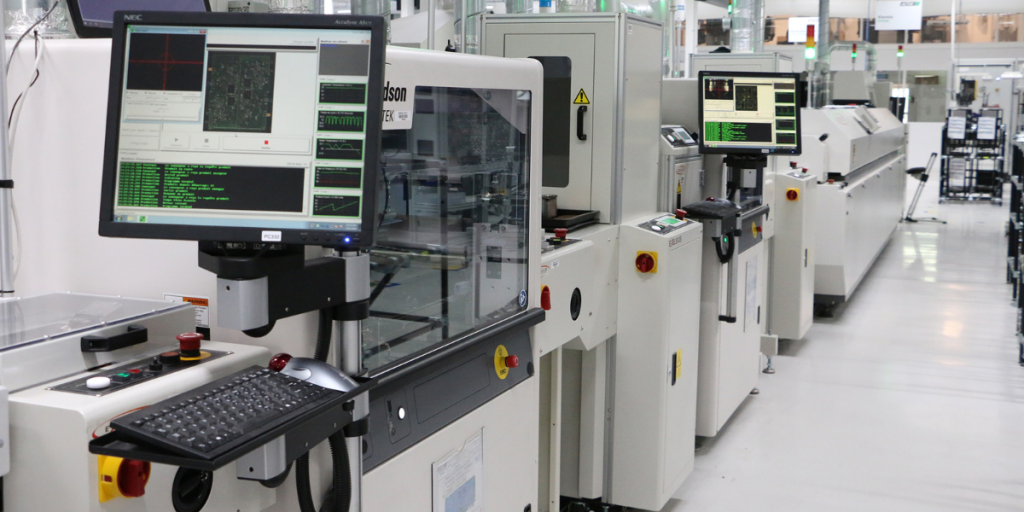
The ACTIA industrial plant in Colomiers, Occitanie, has been awarded the “Industry of the Future Showcase” label, recognizing its commitment to industrial excellence and innovation. Through a large-scale modernization program combining automation, digitalization and team engagement, the site has transformed its electronic manufacturing capabilities while strengthening operational agility and competitiveness in demanding markets.

Discover how ACTIA delivers expert EMS solutions through global reach and innovation.